Thursday, August 20, 2015
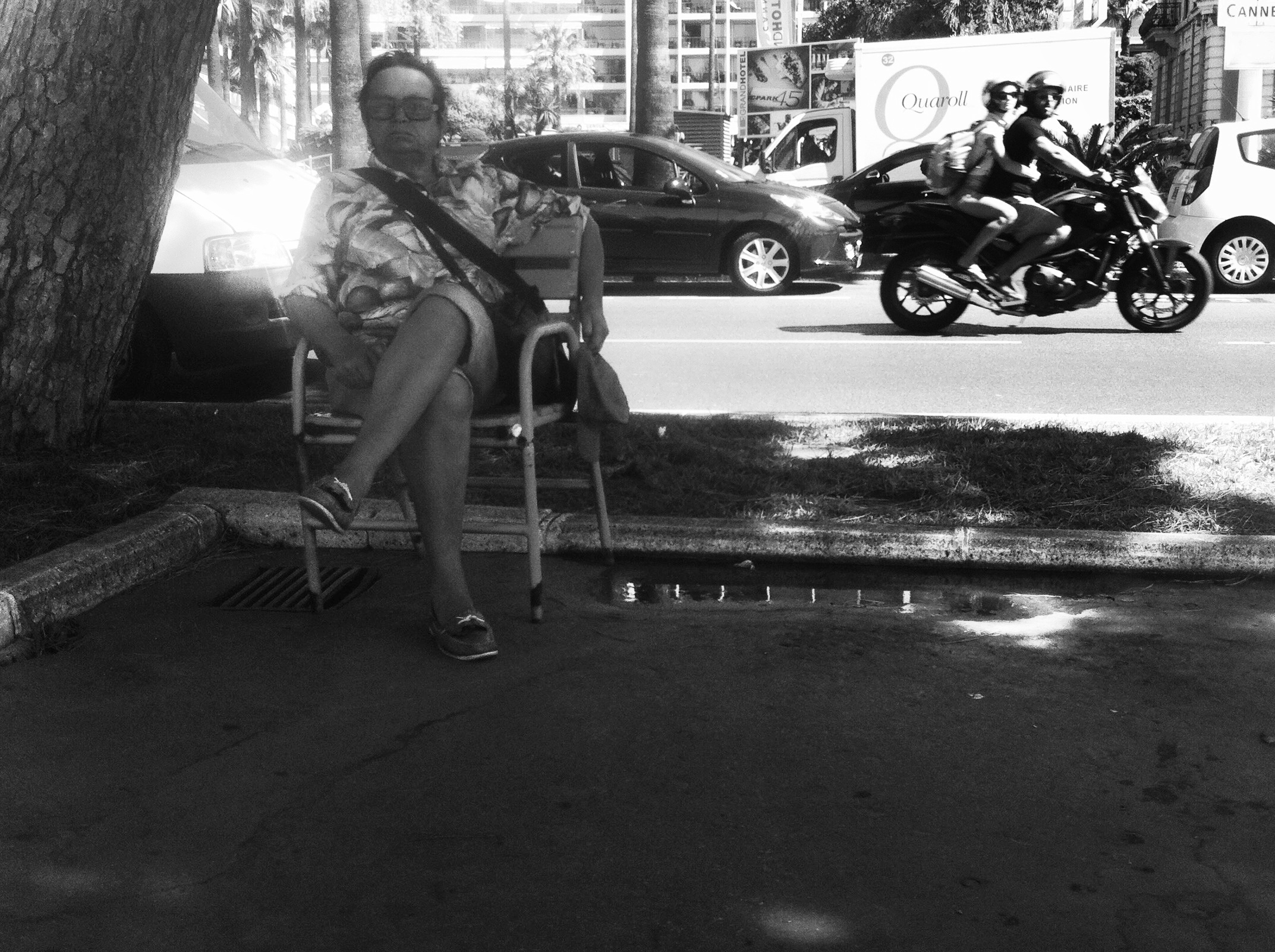
Headache
Labels:
Cannes,
haiga,
haiku,
mindfulness,
paul conneally,
photo haiku,
poetry,
street photography,
zen
Wednesday, August 19, 2015
Sunday, August 16, 2015
Three Break Ups
Labels:
cacti,
Cactus,
Cannes,
haiku,
haiku poetry,
nail bar,
nails,
paul conneally,
poetry,
travel
Friday, August 14, 2015
Tuesday, August 11, 2015
Sweat Stained Shirt

Some men perhaps enjoy shopping for women's clothes with their wife or partner. Most don't.
We do it anyway, grudgingly, looking for an excuse to get out of the shop and wait outside or in some nearby café or better still a pub.
In Cannes there are so many clothes shops to visit and it's so hot that it's worth going in just for the air conditioning. After a while most of the men will finish up outside leaning against walls, sitting on bollards, until their loved one appears perhaps with a bag of purchases or worse without, which means a visit to another shop.
the shop assistant
sips a glass of cold water
my sweat soaked shirt
Paul Conneally
Cannes 2015
Labels:
Cannes,
haibun,
haiku,
Japanese Poetry,
paul conneally,
poetry,
shopping in Cannes,
street photography,
Sweat
Friday, August 07, 2015
Communo Cephalite + Two

The village of Mougins is one of the most exclusive in the South of France being home across the years to many artists and celebrities including: Fernand Léger, Robert Desnos, René Clair, Isadora Duncan, Pablo Picasso, Man Ray, Christian Dior, Jacques Brel, Edith Piaf, Roland Petit, Zizi Jeanmaire, Yves Saint Laurent, Paul Anka, Jean Richepin, Robert Hossein, Catherine Deneuve, Jeanne Moreau, Roger Vivier…
This said it is also a huge tourist attraction with thousands of visitors each year, especially over the summer months.
The village itself becomes an open gallery for sculpture and in 2015 the outdoor and completely free exhibition is called 'MONUMENTAL'.
My photograph here 'Communo Cephalite + Two' features the sculpture 'Communo Cephalite' made by the great French artist Arman in 1995 plus the heads of two tourists walking up the hill behind this bronze bust of Lenin.
Paul Conneally
Mougins
August 2015
Labels:
Arman,
art,
Lenin,
Mougins,
paul conneally,
photography,
Riviera,
sculpture,
South of France
Wednesday, August 05, 2015
Half-Way Home
Labels:
France,
haibun,
haiku,
micropoetry,
Pablo Picasso,
paul conneally,
Picasso,
street photography,
travel,
urinal
Le Banc Des Gênérations' Niki De Saint-Phalle 2002

'Le Banc Des Gênérations' Niki De Saint-Phalle 2002
Mougins, France, 2015
Photo: Paul Conneally
http://nikidesaintphalle.org
Labels:
2015,
art,
France,
French Artists,
Mougins,
Niki De Sainte-Phalle,
public art
Tuesday, August 04, 2015
Heat Haze

The old lady passes some time with a magazine and a Perrier water in the shade of a café umbrella as she waits for the clock to come around to a point where she has to do something, be somewhere, meet someone.
She checks her watch, a mans watch, and asks me what time I have on my watch. I show her. Give or take a tick or two they match up. It's a quarter-to-eleven.
She thanks me saying she thought her watch was slow but clearly not. We share a laugh and I move on up the road to another pottery studio which seem to be everywhere here in the French town of Vallauris.
It's starting to get hot.
heat haze
we visit every shop
for the air-con
Paul Conneally
Vallauris, France
August 3 2015
Labels:
cafes,
haibun,
haiku,
micropoetry,
paul conneally,
poetry,
psychogeography,
street photography,
travel writing
Monday, August 03, 2015
Sunday, August 02, 2015
Deep Shade
Labels:
2015,
France,
haiku,
haiku poetry,
micropoetry,
paul conneally,
street photography,
travel
Location:
Mouans-Sartoux, France
Saturday, August 01, 2015
Friday, July 31, 2015
Stifling Heat
Labels:
bars,
betting,
Café,
France,
haiku,
paul conneally,
PMU,
poetry,
street photography,
travel
Thursday, July 30, 2015
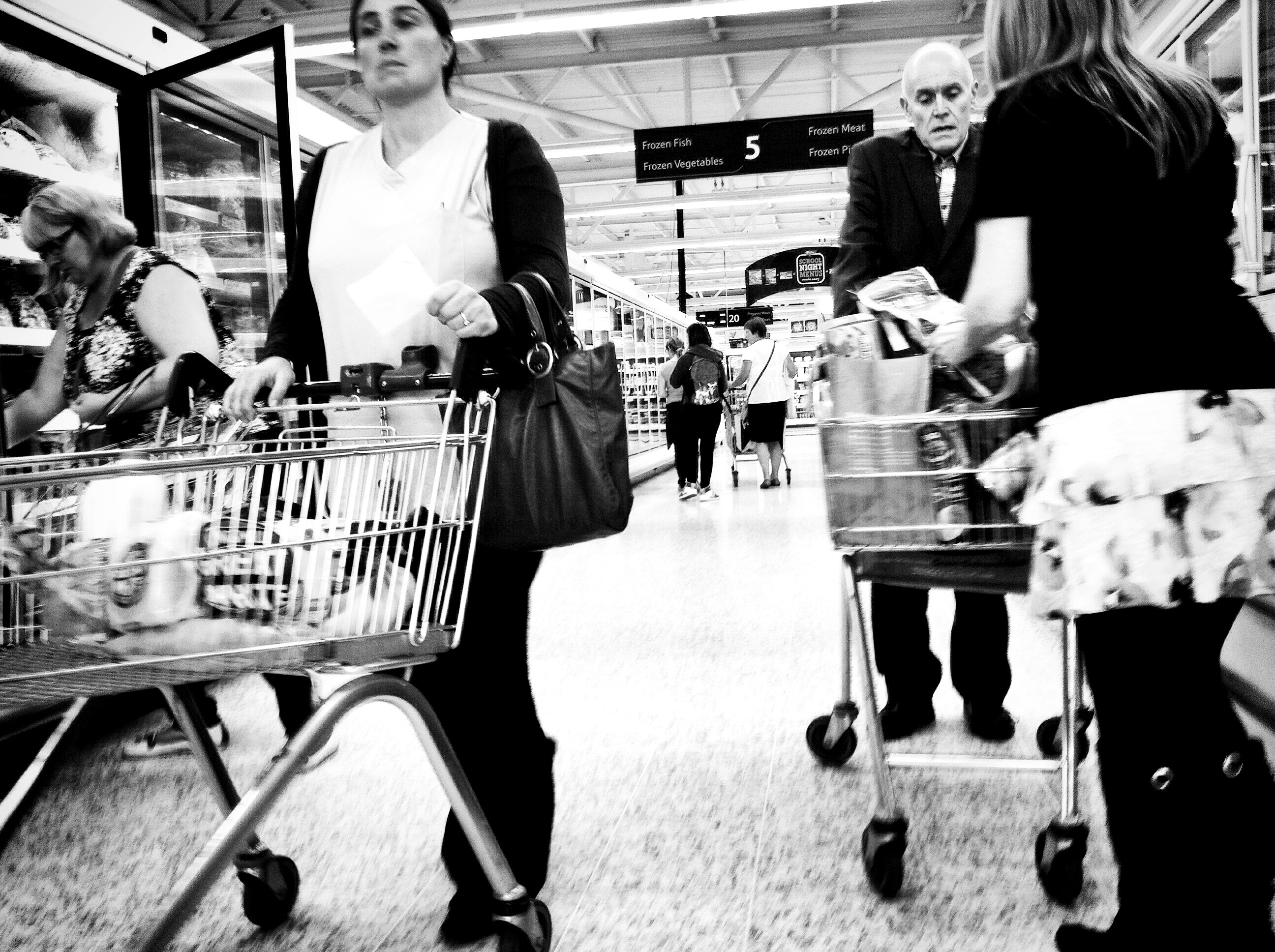
Stacking Shelves
Labels:
dreams,
haiku,
Lost in the supermarket,
paul conneally,
photography,
picnic,
poetry,
Shopping,
work
Under A Palm Tree
Labels:
Cannes,
France,
haiku,
La Croisette,
micro poetry,
poetry,
street photography
Wednesday, July 29, 2015
Monday, July 27, 2015
Pizza Van

Bourg-Les-Valance sits on the north side of the city of Valance and provides a handy stopover as we drive down L'autoroute de Soleil towards the Côte d'Azur.
The hotel we stay in is surrounded by hinterland discount shops, tool hire companies and light industry. It's surprisingly good and the restaurant is excellent. I give myself over to the will of the chef who for twenty-eight euro will contour up for me a 'surprise' three course meal. Neither he nor our waiter will tell me what to expect only that the chef will have a look at me and decide, from what he sees, the dishes that he will cook.
I turn out to be a starter of lightly fried sea bass fillets on a bed of mashed potatoes, a main course of duck slices in a pepper sauce with roasted Mediterranean vegetables and a dessert of shards of white and dark chocolate with pistachio ice cream. He was spot on.
after dinner walk
the light from the pizza van
draws in moths
Paul Conneally
Bourg-Les-Valance
July 26 2015
Labels:
Edward Hopper,
fast food,
France,
haibun,
haiku,
Hotels,
paul conneally,
photography,
Pizza,
poetry,
street photography
Tuesday, July 21, 2015
Monday, July 20, 2015
The Baker and The Biker
I’ve never been one for riding motorbikes but enjoy some of the imagery and mythology that surrounds them.
The crowded narrow roads in and around the towns of the Côte d’Azur seem ideal for two wheeled travel.
Motorcycles, motorbikes, whatever you want to call them, whiz in and out the often stationary cars, vans and lorries.
Sat in a traffic jam, sweat running down my temples, despite the air conditioning, I envy the motorcyclist weaving between the people carriers and Ferraris.
On foot, in search of a certain bar and bread, the motorbikes become an annoyance. Their noise and smell. The fear that one will fail to see me in its weave and knock me over.
such short shadows
the baker asks the biker
to remove his helmet
Paul Conneally
Antibes 2013
Labels:
Antibes,
bakers,
bikers,
Côte d'Azur,
haibun,
haiku,
paul conneally,
photography,
poetry,
street photography
Saturday, July 18, 2015
LA SCIMMIA SULLA SCHIENA - William Burroughs - book cover by MarioDelgado

LA SCIMMIA SULLA SCHIENA - William Burroughs
Book cover designed by Mario Degrada for the Italian translation of William Burroughs classic tale of drug addiction 'Junky'.
Degrada designed many wonderful book covers for Italian publishers Rizzoli.
To hear William Burroughs read the whole of Junkie click this link:
Junkie by William Burroughs
Labels:
addiction,
beat poets,
book design,
books,
graphic design,
Mario Delgado,
Rizzoli,
William Burroughs,
writing
Friday, July 17, 2015
Newspaper Seller
A
Newspaper Seller
It's good to see that despite the online proliferation of news there are still local newspapers and what's more local newspaper street sellers. This jolly chap is at the intersection of Loughborough's Market Street and Market Place. He sells just one publication the weekly Loughborough Echo. He doesn't shout out to passers-by to sell his papers but draws them in with his smile, a broad grin, and kind words.
local gossip
just when will the council
mow these verges?
Paul Conneally
Loughborough
July 16 2015

Newspaper Seller
It's good to see that despite the online proliferation of news there are still local newspapers and what's more local newspaper street sellers. This jolly chap is at the intersection of Loughborough's Market Street and Market Place. He sells just one publication the weekly Loughborough Echo. He doesn't shout out to passers-by to sell his papers but draws them in with his smile, a broad grin, and kind words.
local gossip
just when will the council
mow these verges?
Paul Conneally
Loughborough
July 16 2015
Labels:
England,
Loughborough,
Loughborough Echo,
news,
newspapers,
portrait,
print,
smiles,
street photography,
words
Still Waiting

Still Waiting
The sun is not out but the market is still too warm, too humid.
Sweat trickles down my back.
A man with Tourette's curses the air, marching up between fruit stalls and cheap fashion towards Loughborough's famous Sock Man sculpture.
Strawberries three punnets a pound.
still waiting
the pregnant woman mops
her brow with her sleeve
Paul Conneally
Loughborough
July 2015
Labels:
haibun,
haiku,
Loughborough,
paul conneally,
photography,
poetry,
street photography
Thursday, July 16, 2015
SKEP hive mind - Loughborough University Fruit Routes 2015
Artist Paul Conneally during SKEP Loughborough University June 2015
SKEP
hive mind
Performative, Participative, Collaborative Installation
Anne-Marie Culhane and Paul Conneally
Fruit Routes Loughborough University
18th June 2015
We share our lives with and our very existence depends on the bees - a keystone species in the natural world.
Building on the tradition of Telling the Bees, where beekeepers informed the bees of significant events in their communities or lives, you are invited to share something of your personal thoughts on community, cooperation and the future of our relationship with the ecological community (animals, insects, plants).
Speak out loud
Share your thoughts in silence
Write in the book
Artist Anne-Marie Culhane during SKEP Loughborough University June 2015
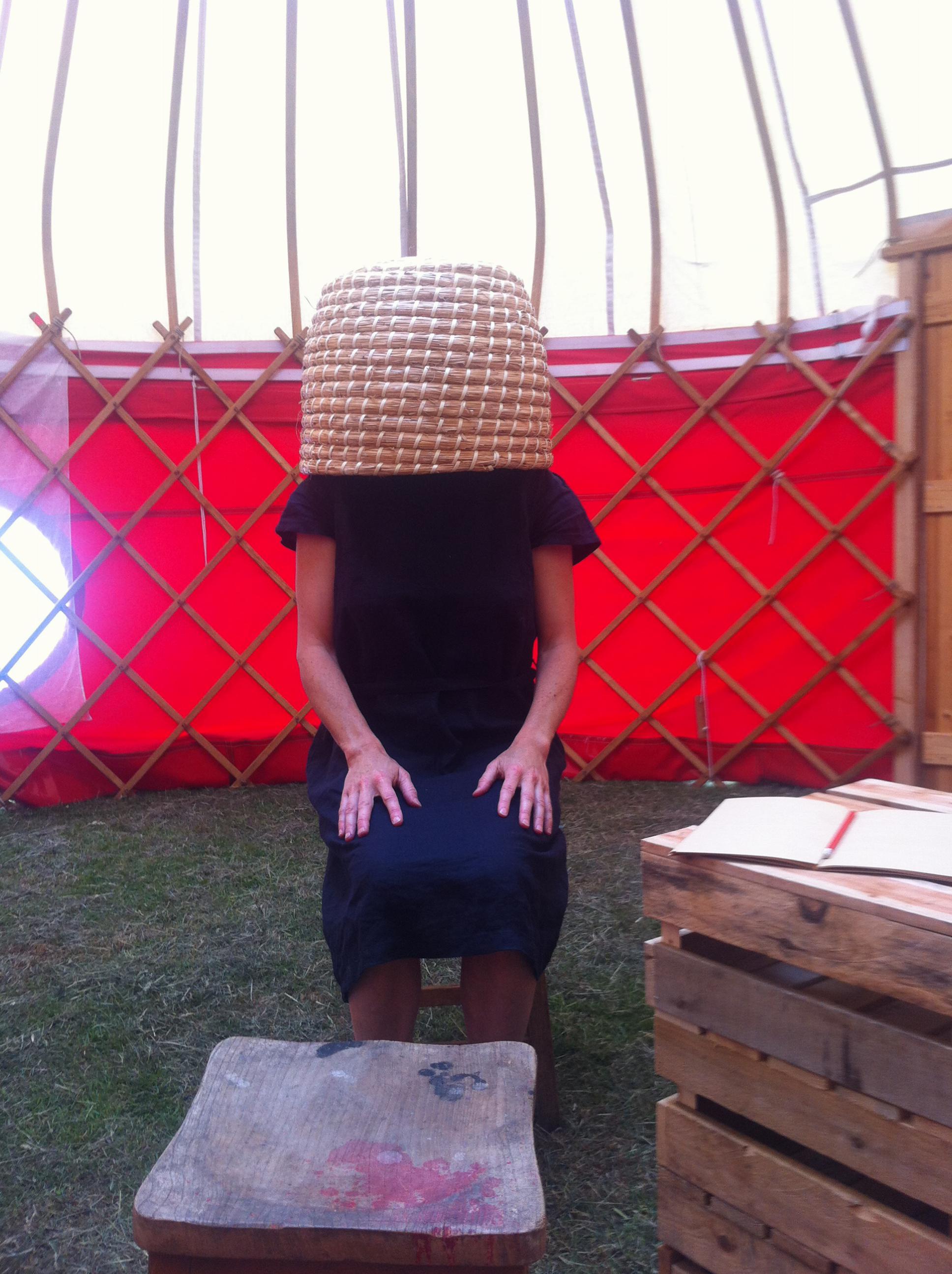
SKEP is part of the ongoing Fruit Routes / Eat Your Campus work at Loughborough University in June 2015. SKEP was one element in a day of events and interventions coordinated by Culhane that included a wild tea party, visits to the campus apiary and an evening of moth catching and watching. SKEP offered a space for thought and quiet in the presence of a listener, SKEP, Culhane or Conneally sat passively, silent, wearing a traditional British woven basket beehive, a skep, on their head.
14 Nights in Carnac

14 Nights in Carnac
mixed media - book and oak leaves
Paul Conneally 2006
14 Nights in Carnac - a piece performed and made in July 2006. The artist spends 14 nights in Carnac famous for its megaliths its standing stones. He lives and sleeps below two oak trees. Each night reading sections of Haruki Murakami’s The Wind-up Bird Chronicle plucking an oak leaf from the trees and placing it inside the book as a bookmark.
The experience exists as the book with the 14 leaves pressed inside it.
In 2007 images of the pressed leaves inside the book are transferred on to white ceramic bathroom tiles and form part of Conneally’s exhibition in Mile End Arts Pavilion ‘The Renewability’ curated by Tomomi Iguchi.
Labels:
art,
Haruki Murakami,
megalithic,
oak trees,
Performance Art,
psychogeography,
splacist,
standing stones,
trees,
writing
Monday, July 13, 2015
INVIGILATOR : DIGBETH

Thinking back to 'Invigilator : DIGBETH' discussions I am struck by oblique and direct references to boredom - the gallery invigilators job being referred to as sometimes boring.
When transposed to an outside space where the invigilator has to stand or sit and simply ‘watch over’ then the space and the action of simply watching over it sets up an interaction that is boring in such a way that it can transcend boredom if we let it… The space becoming bored of the invigilator throws up new facets new resonances between it and the 'watcher over’ the 'invigilator’ A couple of Invigilator:Digbeth participants said that they found the invigilating very zen like - another not at all - the invigilating passed-by with a contrived doing - a counting of and classification of vehicles passing through the invigilated space. Such actions are invoked by the space itself as it is watched over - after all it was only chance that the space invigilated happened to have cars passing through it - this counting this classifying borne out of the possibility of boredom.
“INVITE BOREDOM” - paul conneally 2008
Sunday, July 12, 2015
Summer Shorts

In the hot afternoon it's good to escape into the shade of a city centre pub. A cool beer away from the hustle and bustle of the busy streets. Late enough to miss the lunchtime rush and too early for after work drinkers.
I sweat out a few thoughts.
summer shorts
the drunk in the corner
tells me he loves me
Paul Conneally
The Orange Tree
Nottingham
July 2015
Labels:
drinking,
haibun,
haiku,
Nottingham,
paul conneally,
poetry,
pubs,
The Orange Tree
Saturday, July 11, 2015
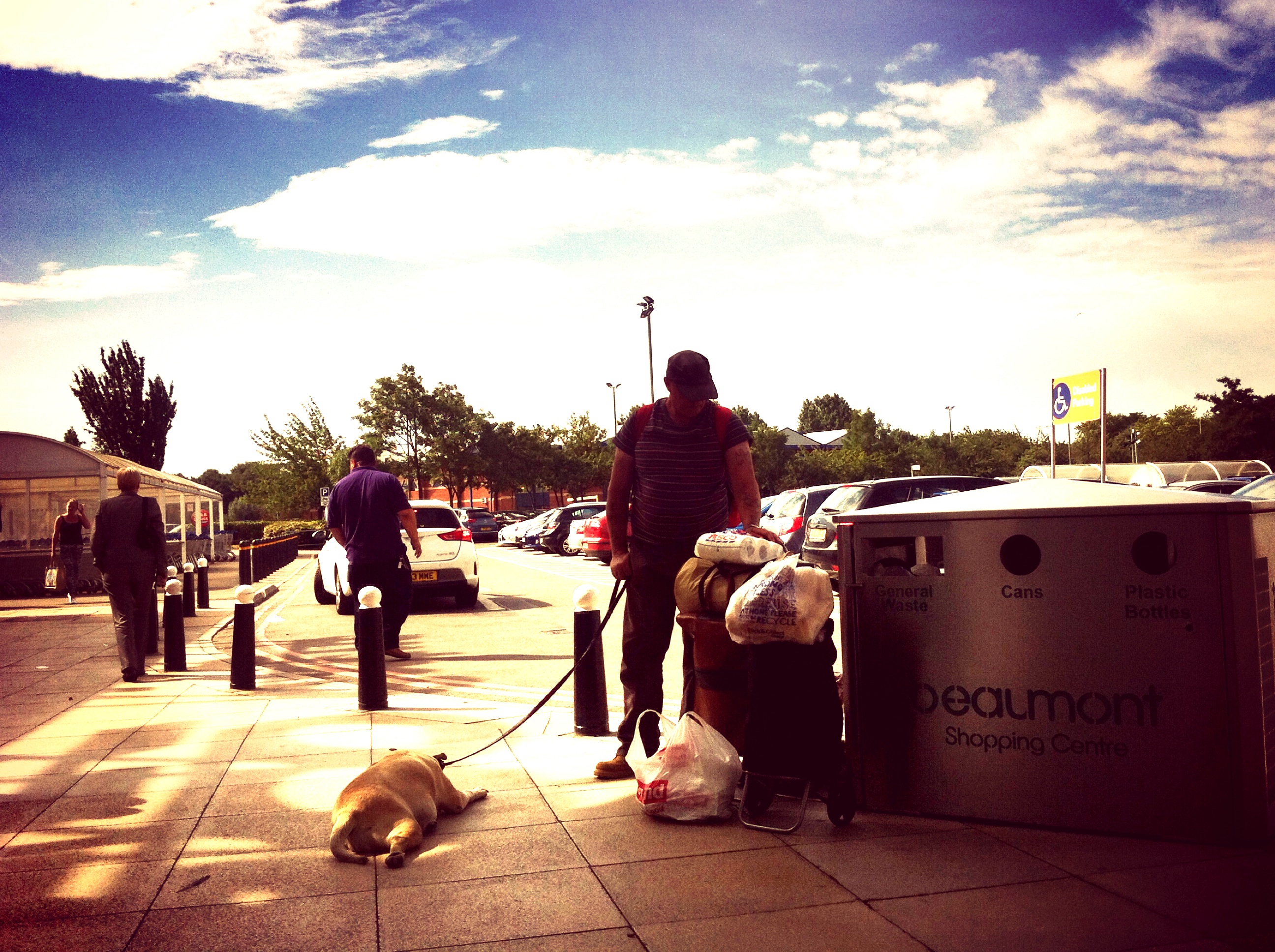
This Pressing Heat
Labels:
dogs,
haiku,
Leicester,
paul conneally,
poetry,
street photography,
summer,
This Is England,
UK
Wednesday, July 08, 2015
Sunday, July 05, 2015
The Sound Of Water - Richard Thornton - Paul Conneally - Jemma Bagley

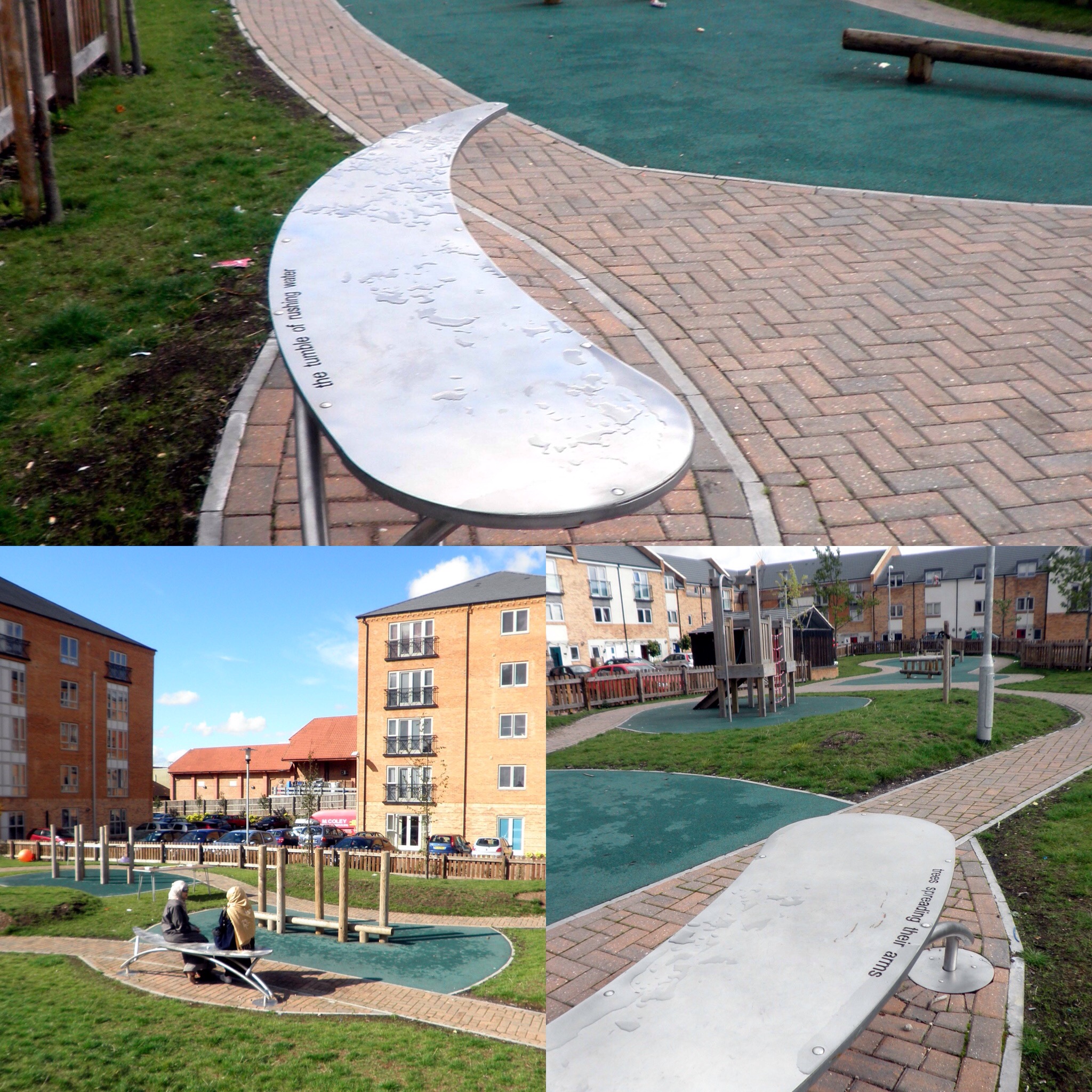
Metal benches designed and made by sculptor Richard Thornton with words, fragments of haiku, written by members of the local community with artist poet Paul Conneally, laser cut into them.
They are in the community recreation area of the Watermead housing development in Thurmaston, Charnwood, Leicestershire.
The work was coordinated by community artist Jemma Bagley from the wonderful arts organisation Charnwood Arts. Jemma also brought together a book out of the project called The Sound Of Water which was distributed free to hundreds of people in the area featuring poems and walks undertaken as part of the commission.
Labels:
Charnwood Arts,
design,
haiku,
Jemma Bagley,
paul conneally,
poetry,
Richard Thornton,
sculpture,
urban design
Saturday, July 04, 2015
Our Painted Soles

“Our painted soles, walking or running with no regard to where they land down a long roll of paper” - Paul Conneally
from ‘Involuntary Painting 1 New Parks : New York’ Millree Hughes & Paul Conneally and people from New Parks community with and for Soft Touch Arts and New Parks Library, Leicester, UK
Friday, July 03, 2015
On the Passage of a Few Persons Through a Rather Brief Period of Time - Guy Debord
On the Passage of a Few Persons Through a Rather Brief Period of Time
Dansk-Fransk Experimentalfilmskompagni (1959)
Translated by Ken Knabb
Voice 1 (male “professional announcer” type): This neighborhood1 was made for the wretched dignity of the petty bourgeoisie, for respectable occupations and intellectual tourism. The sedentary population of the upper floors was sheltered from the influences of the street. This neighborhood has remained the same. It was the strange setting of our story, where a systematic questioning of all the diversions and works of a society, a total critique of its idea of happiness, was expressed in acts.
These people also scorned “subjective profundity.” They were interested in nothing but an adequate and concrete expression of themselves.
Voice 2 (Debord, monotone): Human beings are not fully conscious of their real life — usually groping in the dark; overwhelmed by the consequences of their acts; at every moment groups and individuals find themselves confronted with results they have not wished.
Voice 1: They said that oblivion was their ruling passion. They wanted to reinvent everything each day; to become the masters and possessors of their own lives.
Just as one does not judge a man according to the conception he has of himself, one cannot judge such periods of transition according to their own consciousness; on the contrary, one must explain the consciousness through the contradictions of material life, through the conflict between social conditions and the forces of social production.
The progress achieved in the domination of nature was not yet matched by a corresponding liberation of everyday life. Youth passed away among the various controls of resignation.
Our camera has captured for you a few aspects of a provisional microsociety.
The knowledge of empirical facts remains abstract and superficial as long as it is not concretized by its integration into the whole — which alone permits the supersession of partial and abstract problems so as to arrive at their concrete essence, and implicitly at their meaning.
This group was on the margins of the economy. It tended toward a role of pure consumption, and first of all the free consumption of its time. It thus found itself directly engaged in qualitative variations of everyday life but deprived of any means to intervene in them.
The group ranged over a very small area. The same times brought them back to the same places. No one went to bed early. Discussion on the meaning of all this continued...
Voice 2: “Our life is a journey — In the winter and the night. — We seek our passage...”
Voice 1: The abandoned literature nevertheless exerted a delaying action on new affective formulations.
Voice 2: There was the fatigue and the cold of the morning in this much-traversed labyrinth, like an enigma that we had to resolve. It was a looking-glass reality through which we had to discover the potential richness of reality.
On the bank of the river evening began once again; and caresses; and the importance of a world without importance. Just as the eyes have a blurred vision of many things and can see only one clearly, so the will can strive only incompletely toward diverse objects and can completely love only one at a time.
Voice 3 (young girl): No one counted on the future. It would never be possible to be together later, or anywhere else. There would never be a greater freedom.
Voice 1: The refusal of time and of growing old automatically limited encounters in this narrow, contingent zone, where what was lacking was felt as irreparable. The extreme precariousness of the means of getting by without working was at the root of this impatience which made excesses necessary and breaks definitive.
Voice 2: One never really contests an organization of existence without contesting all of that organization’s forms of language.
Voice 1: When freedom is practiced in a closed circle, it fades into a dream, becomes a mere representation of itself. The ambiance of play is by nature unstable. At any moment “ordinary life” can prevail once again. The geographical limitation of play is even more striking than its temporal limitation. Any game takes place within the contours of its spatial domain. Around the neighborhood, around its fleeting and threatened immobility, stretched a half-known city where people met only by chance, losing their way forever.
The girls who found their way there, because they were legally under the control of their families until the age of eighteen, were often recaptured by the defenders of that detestable institution. They were generally confined under the guard of those creatures who among all the bad products of a bad society are the most ugly and repugnant: nuns.
What usually makes documentaries so easy to understand is the arbitrary limitation of their subject matter. They describe the atomization of social functions and the isolation of their products. One can, in contrast, envisage the entire complexity of a moment which is not resolved into a work, a moment whose movement indissolubly contains facts and values and whose meaning does not yet appear. The subject matter of the documentary would then be this confused totality.
Voice 2: The era had arrived at a level of knowledge and technical means that made possible, and increasingly necessary, a directconstruction of all aspects of a liberated affective and practical existence. The appearance of these superior means of action, still unused because of the delays in the project of liquidating the commodity economy, had already condemned aesthetic activity, whose ambitions and powers were both outdated. The decay of art and of all the values of former mores had formed our sociological background. The ruling class’s monopoly over the instruments we needed to control in order to realize the collective art of our time had excluded us from a cultural production officially devoted to illustrating and repeating the past. An art film on this generation can only be a film on its absence of real creations.
Everyone unthinkingly followed the paths learned once and for all, to their work and their home, to their predictable future. For them duty had already become a habit, and habit a duty. They did not see the deficiency of their city. They thought the deficiency of their life was natural. We wanted to break out of this conditioning, in quest of another use of the urban landscape, in quest of new passions. The atmosphere of a few places gave us intimations of the future powers of an architecture it would be necessary to create to be the support and framework for less mediocre games. We could expect nothing of anything we had not ourselves altered. The urban environment proclaimed the orders and tastes of the ruling society just as violently as the newspapers. It is man who makes the unity of the world, but man has extended himself everywhere. People can see nothing around them that is not their own image; everything speaks to them of themselves. Their very landscape is alive. There were obstacles everywhere. There was a cohesion in the obstacles of all types. They maintained the coherent reign of poverty. Everything being connected, it was necessary to change everything by a unitary struggle, or nothing. It was necessary to link up with the masses, but we were surrounded by sleep.
Voice 3: The dictatorship of the proletariat is a desperate struggle, bloody and bloodless, violent and peaceful, military and economic, educational and administrative, against the forces and traditions of the old world.
Voice 1: In this country it is once again the men of order who have rebelled. They have reinforced their power. They have been able to aggravate the grotesqueness of the ruling conditions according to their will. They have embellished their system with the funereal ceremonies of the past.
Voice 2: Years, like a single instant prolonged to this point, come to an end.
Voice 1: What was directly lived reappears frozen in the distance, fit into the tastes and illusions of an era, carried away with it.
Voice 2: The appearance of events that we have not made, that others have made against us, now obliges us to be aware of the passage of time, its results, the transformation of our own desires into events. What differentiates the past from the present is precisely its out-of-reach objectivity; there is no more should-be; being is so consumed that it has ceased to exist. The details are already lost in the dust of time. Who was afraid of life, afraid of the night, afraid of being taken, afraid of being kept?
Voice 3: What should be abolished continues, and we continue to wear away with it. We are engulfed. We are separated. The years pass and we haven’t changed anything.
Voice 2: Once again morning in the same streets. Once again the fatigue of so many similarly passed nights. It is a walk that has lasted a long time.
Voice 1: Really hard to drink more.
Voice 2: Of course one might make a film of it. But even if such a film succeeds in being as fundamentally disconnected and unsatisfying as the reality it deals with, it will never be more than a re-creation — poor and false like this botched traveling shot.
Voice 3: There are now people who pride themselves on being authors of films, as others were authors of novels. They are even more backward than the novelists because they are unaware of the decomposition and exhaustion of individual expression in our time, ignorant of the end of the arts of passivity. They are praised for their sincerity since they dramatize, with more personal depth, the conventions of which their life consists. There is talk of the liberation of the cinema. But what does it matter to us if one more art is liberated through which Tom, Dick or Harry can joyously express their slavish sentiments? The only interesting venture is the liberation of everyday life, not only in the perspectives of history but for us and right away. This entails the withering away of alienated forms of communication. The cinema, too, has to be destroyed.
Voice 2: In the final analysis, stars are created by the need we have for them, and not by their talent or lack of talent or even by the film industry or advertising. Miserable need, dismal, anonymous life that would like to expand itself to the dimensions of cinema life. The imaginary life on the screen is the product of this real need. The star is the projection of this need.
The images of the advertisements during the intermissions are more suited than any others for evoking an intermission of life.
To really describe this era it would no doubt be necessary to show many other things. But what would be the point?
Better to grasp the totality of what has been done and what remains to be done than to add more ruins to the old world of the spectacle and of memories.
Notes
1. This film, which evokes the lettrist experiences at the origin of the situationist movement, opens with shots of the Paris district frequented by the lettrists in the early 1950s. (KK)
Paul Conneally
Monday, June 29, 2015
Wave Cabinet by Sebastian Errazuriz
Wave from Sebastian Errazuriz Studio on Vimeo.
This is an amazing piece of sculptural furniture from Sebastian Errazuriz.
His studio page describes him thus:
Sebastian Errazuriz is a New York based Artist and Designer. Tackling everything from political arworks to giant public art projects, from functional sculptures to experimental furniture, from women’s shoes to racing motorcycles. Sebastian Errazuriz explores the border between the sculptural, symbolic and functional qualities of both art and design.
Find out more about Sebastian here: Sebastian Errazuriz Studio
This is an amazing piece of sculptural furniture from Sebastian Errazuriz.
His studio page describes him thus:
Sebastian Errazuriz is a New York based Artist and Designer. Tackling everything from political arworks to giant public art projects, from functional sculptures to experimental furniture, from women’s shoes to racing motorcycles. Sebastian Errazuriz explores the border between the sculptural, symbolic and functional qualities of both art and design.
Find out more about Sebastian here: Sebastian Errazuriz Studio
Labels:
art,
cabinet maker,
design,
Furniture design,
home,
lifestyle,
New York,
Sebastian Errazuriz,
style
Monday, June 22, 2015
The Act of the Spartan Boy (excerpt) - Stuart Layton
The Act of the Spartan Boy (Exceprt) from Stuart Layton on Vimeo.
"The Act of the Spartan Boy is a new film by Stuart Layton (born in Walsall, lives in Malvern, UK). The title was found on the internet but is fitting as the film draws on Stuart’s memories of growing up in the Black Country. However, this is not a linear narrative. The film is constructed of both shot and found footage and both written and found texts.
The viewer cannot settle as scale and viewpoint continually alter and the screen size constantly changes. The sound incorporates both Stuart’s vocal contributions with what sounds like an absurd commentary by a TV or radio presenter.
As the film gathers intensity, a pulsating sound based on the Taos Hum ramps up the tension. (A strange humming was heard by inhabitants of Taos, New Mexico. Despite scientific interventions, there has never been a clear explanation for the humming, which has since been heard in other places, notably in Cradley Heath). Sometimes funny, sometimes touching, at others sinister,
Stuart offers a complex and layered exploration of time, memory and history where seemingly random recollections, both real and imagined, collide and conflict."
Text is from the web catalogue for the show Small Worlds (May to September 2015) at The New Art Gallery, Walsall, UK where the full version of The Act of the Spartan Boy film is featured
"The Act of the Spartan Boy is a new film by Stuart Layton (born in Walsall, lives in Malvern, UK). The title was found on the internet but is fitting as the film draws on Stuart’s memories of growing up in the Black Country. However, this is not a linear narrative. The film is constructed of both shot and found footage and both written and found texts.
The viewer cannot settle as scale and viewpoint continually alter and the screen size constantly changes. The sound incorporates both Stuart’s vocal contributions with what sounds like an absurd commentary by a TV or radio presenter.
As the film gathers intensity, a pulsating sound based on the Taos Hum ramps up the tension. (A strange humming was heard by inhabitants of Taos, New Mexico. Despite scientific interventions, there has never been a clear explanation for the humming, which has since been heard in other places, notably in Cradley Heath). Sometimes funny, sometimes touching, at others sinister,
Stuart offers a complex and layered exploration of time, memory and history where seemingly random recollections, both real and imagined, collide and conflict."
Text is from the web catalogue for the show Small Worlds (May to September 2015) at The New Art Gallery, Walsall, UK where the full version of The Act of the Spartan Boy film is featured
Small Worlds - New Art Gallery Walsall
Small Worlds
21 May - 6 September 2015
Floor 3
Today, we live in a fluid culture where, within our towns and cities, different languages are spoken, different cultures and religions prevail and we can consume materials and goods from throughout the world. TV, the Internet, advertising and new technologies bring the whole of the world to our doorstep. High streets are becoming more generic with local distinctions and characteristics becoming increasingly obscure.
The artists in this exhibition focus their attention on the urban environment. Their work allows us to reflect on a variety of considerations. How do we understand the concept of the local within an increasingly globalised context? What impact does the transformation of our local environment have on our identity and our communities? For some artists, Walsall provides a focus for a consideration of the impact of social and economic change in those areas on the periphery of our major towns and cities.
Participating artists include AirSpace Gallery (Andrew Branscombe, Anna Francis, Glen Stoker), Graham Chorlton,
Rita Donagh, Richard Forster, Cameron Galt, Andreas Gefeller, Naiza Khan, Stuart Layton, Lucy McLauchlan,
Laura Oldfield Ford, Mark Power and Rashid Rana.
Many of the works selected are from Walsall's Permanent Collection including an international collection of works on the theme of the modern metropolis jointly acquired by The New Art Gallery Walsall and Birmingham Museums Trust, in partnership with Ikon Gallery, and with the support of the Art Fund through Art Fund International.
Join Head of Exhibitions and curator of Small Worlds, Deborah Robinson for an informal tour of the exhibition.
Just drop in!
Image credit: Rashid Rana, Language Series 3, 2011, lightjet print + DIASEC, 270 x 360cm. Presented by the Art Fund under Art Fund International for joint ownership by The New Art Gallery Walsall and Birmingham Museums Trust, 2013. Image courtesy of the artist and Lisson Gallery.
--------------------------
Saturday, June 20, 2015
SKEP Hive Mind - Anne-Marie Culhane and Paul Conneally
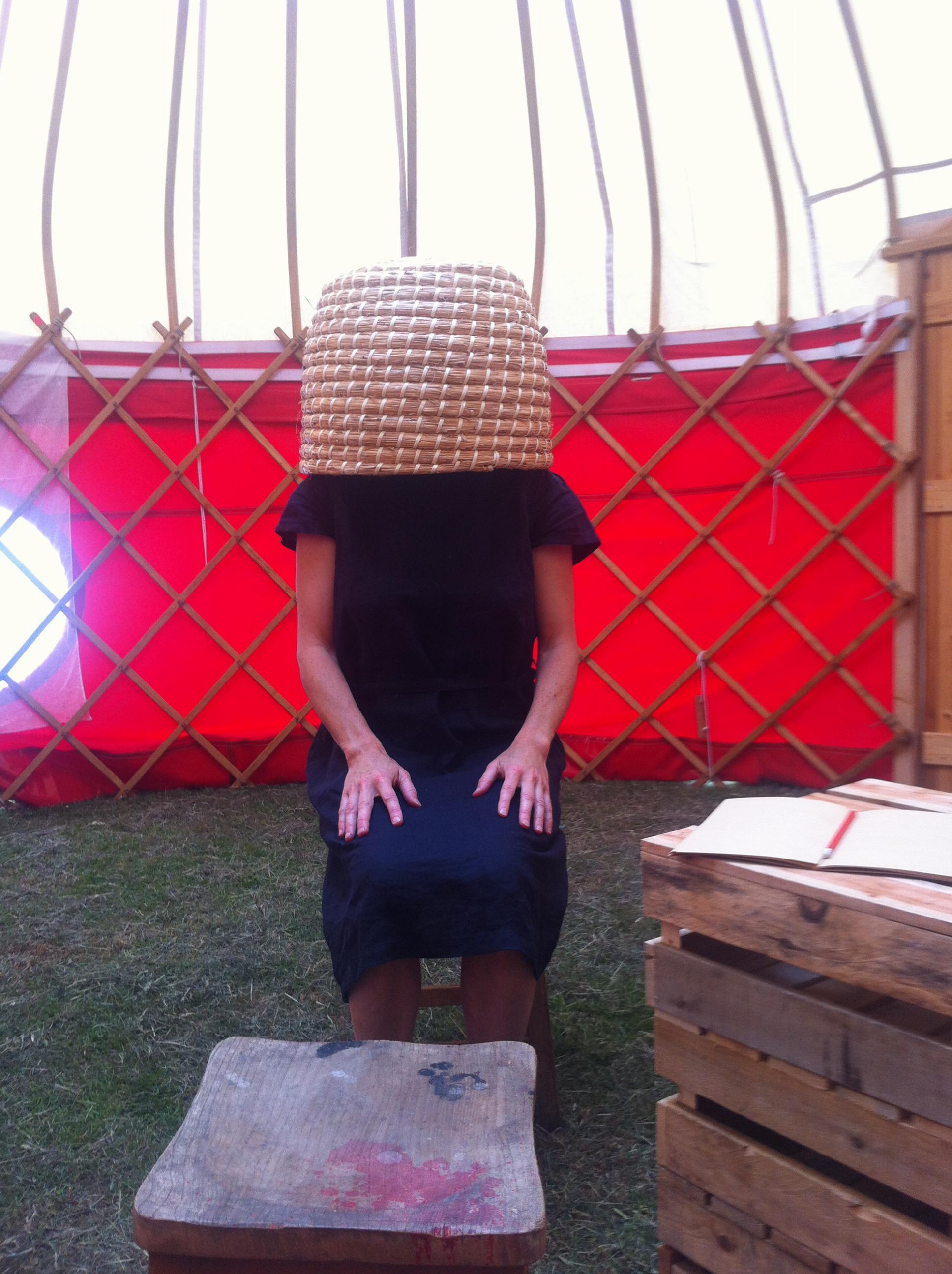
SKEP
hive mind
Performative, Participative, Collaborative Installation
Anne-Marie Culhane and Paul Conneally
Fruit Routes Loughborough University
Took place on: 18th June 2015
We share our lives with and our very existence depends on the bees - a keystone species in the natural world.
Building on the tradition of Telling the Bees, where beekeepers informed the bees of significant events in their communities or lives, people were invited to share something of their personal thoughts on community, cooperation and the future of our relationship with the ecological community (animals, insects, plants).
"Speak out loud
Share your thoughts in silence
Write in the book"
Culhane & Conneally 2015
Monday, June 15, 2015
Sunday, June 14, 2015
Wet Weekend
Labels:
art,
Cultural forager,
culture,
flowers,
haiku,
paul conneally,
photographers,
photography,
plants,
poetry,
psychogeography,
splacist
World's First Splacist Training Camp - Birmingham 2011

What Are The Splacists? The World’s First Splacist Training Camp
Conceived and led by splacist Nikki Pugh with Hannah Nicklin at MADE Birmingham November 30th 2011 with Paul Conneally in attendance.
A group of artists and architects make and use the camp as a base to interogate Splacist Manifesto 2.0 planning and then undertaking direct actions on the streets of Birmingham.
Later they meet with others on the rooftop of a multistorey carpark in Birmingham’s Jewellery Quarter to experience DUST a splacist work by Hannah Nicklin and Nikki Pugh.
splacist (splā sĭst)
A contemporary mode of practice proposed by Paul Conneally. A new set of ideologies defined by Hannah Nicklin and Nikki Pugh. A hop, skip and a jump away from phsychogeography and the works of the situationist international. Think space, place and splice.
'INVIGILATOR : DERBY' PAUL CONNEALLY at Pecha Kucha Coventry
Pecha Kucha Coventry | Vol 8 | Paul Conneally from MINDRIOT PRODUCTIONS on Vimeo.
Artist and Cultural Forager, Paul Conneally, talks in Coventry, UK, on his psychogeography / splacist exporation in partnership with artists Nikki Pugh and Kev Ryan 'INIVIGILATOR : DERBY'.

Photo: Kev Ryan
Artist and Cultural Forager, Paul Conneally, talks in Coventry, UK, on his psychogeography / splacist exporation in partnership with artists Nikki Pugh and Kev Ryan 'INIVIGILATOR : DERBY'.

Photo: Kev Ryan
Saturday, June 13, 2015
Friday, June 12, 2015
Surveillance - Paul Conneally 2008

still from 'Surveillance' Paul Conneally 2008
Surveillance comes out of INVIGILATOR : DIGBETH the 5th in the INVIGILATOR series conceived by artists Paul Conneally, Nikki Pugh and Kev Ryan.
The piece features the text of a poem which is a direct transcript taken by Paul Conneally as he heard it of INVIGILATOR : DIGBETH participant artist Harry Palmer in the discussion workshop which formed part of INVIGILATOR : DIGBETH and took place after the Invigilators had returned to VIVID art gallery in the heart of Birmingham's Digbeth area. The sound track is made from a snippet of Harry saying the word ' surveillance ' combined with the ambient sounds of the VIVID space that the artist led discussion was taking place in.
The soundtrack contains backmasked material that may reveal hidden messages to some listeners.
Producer Paul Conneally
Audio/Visual sound, color
Language English
Credits
Camera: Paul ConneallySound: Paul Conneally
Starring: Harry Palmer
Labels:
art,
Birmingham artists,
Brit Art,
dada,
film,
paul conneally,
poetry,
psychogeography,
splacist
Subscribe to:
Posts (Atom)