Showing posts with label heritage. Show all posts

Saturday, May 27, 2017

Memorial Stones

A pile of bricks represented as a memorial by artist Paul Conneally 2017

a pile of red bricks
under a horse chestnut tree
memorial stones

At the site of the Califat Mine on the eighth of October 1863 a coming in of water filled the mine workings killing three miners:

Harry Clements 16
Jeremiah Rose 40
Thomas Bird 50

Paul Conneally
Califat Colliery
Swannington, UK

May 2017

Friday, September 30, 2016

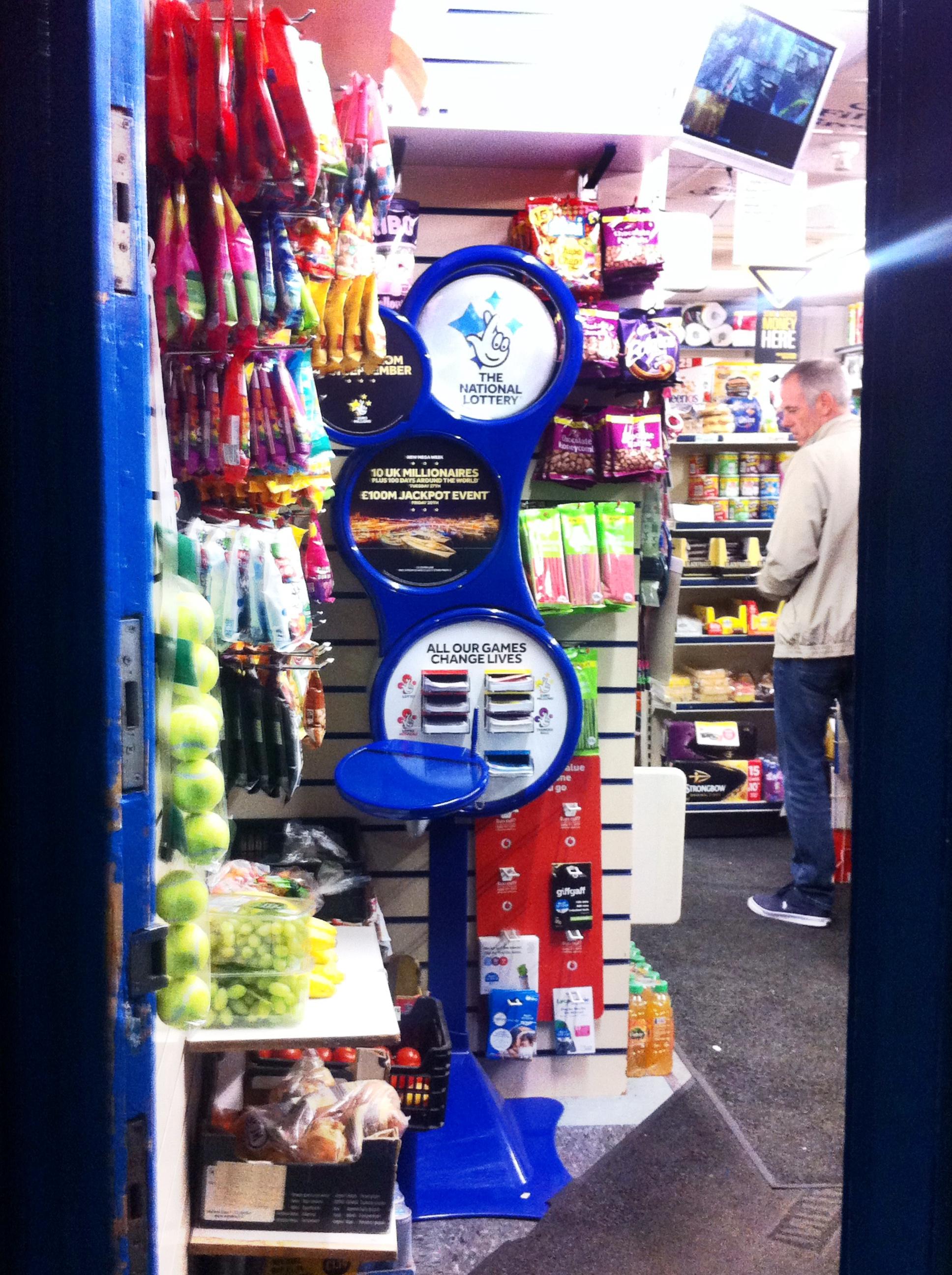
Giving With Benefits: Just Who Owns The National Lottery?


Gambling is firmly entrenched within British society. The National Lottery is perhaps the most accessible form of gambling with tickets on sale in almost every small grocery or news shop along with the biggest supermarkets.
.
The lottery, with its huge prizes and a percentage of profits going to charitable and sporting projects perhaps feels to many as though it's not gambling at all, just a way of supporting that might result in a windfall. A kind of 'giving with benefits'.
.
Let's not pull the wool over our own eyes. The National Lottery along with its associated scratch cards is gambling and for some it forms an addiction that ruins family finances and life. This is a problem that affects poorer families and communities disproportionately as it is in these communities that most scratch cards and lottery tickets are bought.
.
The government uses the lottery to subsidise some services that have seen cuts through the various funds such as the National Lottery Heritage Fund and the sports funding. One can get the impression that it is in fact a national duty to buy lottery products if only to make sure that our haul of Olympic and Paralympic gold medals is maintained and in fact increased.
.
The lottery is operated but not now owned by Camelot. Camelot is in fact now owned by a Canadian pension company. Annual accounts from Camelot showed that gross ticket sales secured an enormous £7.2 billion in 2015, up from £6.7 billion in the previous year. They reported a profit of around £72 million. Whilst profits go up year on year the chances of winning have actually fallen with tickets doubling in price from £1 to £2 but prize money not doing the same. In addition to the reported Camelot profits millions are also paid over to its parent company, the Ontario Teachers’ Pension Plan, rather than being handed on to good causes.
.
It is improbable that lottery culture will demise anytime soon but bringing it into public ownership rather than private ownership would see more of the profits of our gambling fixation remaining within the public realm. As for online gambling companies with their emphasis on football betting and wall to wall advertising well that's another story.

Paul Conneally
September
2016

Photograph: Filbert Street Grocery, Leicester, Paul Conneally 2016
.
.

Sunday, March 27, 2016

Sunday, March 13, 2016

Fast Messengers 飛脚 (hikyaku)


  • Japanese: 飛脚 (hikyaku)
  • Hikyaku were couriers or messengers active in the medieval and early modern periods, who transported currency, letters, packages, and the like. In the Edo period, the network of hikyaku messengers expanded dramatically, and also became more organized and systematized.

    Sando hikyaku (三度飛脚) traveled the Tôkaidô three times a month, and were generally employed by shogunate officials in Osaka and Kyoto to communicate with the shogunatein Edo. The messengers made use of horses made ready at post towns along the way - in theory, three horses ready and available at any given time - to ensure they would always have a fresh horse and thus the ability to travel more quickly.

    The same term, sando hikyaku, was also used to refer to an independent network of messengers (i.e. not working directly for the shogunate) who operated commercially in transporting messages and goods along the Tôkaidô, beginning around 1664. These commercial messengers were also known as jô bikyaku in Edo, and junban hikyaku in Kyoto, and operated out of roughly 86 establishments in Kyoto and at least nine in Osaka, with branch operations in Edo, and roughly twenty post-stations along the route. A much smaller group of messenger operators, known as jôge hikyaku (上下飛脚) or rokkumi hikyaku (六組飛脚) were based in Edo, and specialized in transporting materials for provincial daimyô. The Kyoto/Osaka-based messengers soon expanded their business, establishing routes connecting those cities with Tanba and Harima provinces, and with major provincial cities such as Sendai, Nagasaki, Kanazawa, and Fukui. Each company ran on a different schedule, generally sending and receiving messengers three times every ten days; a manager called a sairyo oversaw operations and took responsibility for the safety of packages.

    The shogunate also operated a network of messengers along all five major highways (the Gokaidô) called tsugi hikyaku (継飛脚), to convey official messages to shogunate and daimyô domains. Horses were kept ready at stations called tsugitate, spaced roughly eight kilometers apart, for use by the messengers.

    Some of the most powerful daimyô maintained their own messenger networks, called daimyô hikyaku or shichi-ri-hikyaku, as these networks generally had horses ready every seven ri (shichi-ri). The two most prominent daimyô who maintained such networks were the Gosanke Tokugawa branch families based in Wakayama and Nagoya. Messengers in the service of Wakayama han left Edo on the 5th, 15th, and 25th of each month, and left Wakayama on the 10th, 20th, and 30th.

    All in all, the time it took to convey messages from Osaka to Edo or vice versa, across 500 km, settled into a standard of six days by the end of the 17th century; in the 18th century, as the economy boomed and road and river traffic increased, delays due to congestion and other factors increased as well, and what once took six days now more frequently took ten or twelve. Meanwhile, however, commercial messenger services sought ways to cut down their times, and soon haya hikyaku (quick messengers) were making the journey in five, four, or as little as three and a half days, gaining time by running at night, and by making stops at fewer stations. In the 19th century, messengers somehow managed to cut the time even further, making the journey in as little as two days. However, these super express services were quite expensive, costing as much as four, or even eight or nine ryô for three-and-a-half day delivery of a message.

    Text shared by Little Onion from: http://wiki.samurai-archives.com/index.php?title=Hikyaku

    Saturday, October 10, 2015

    The Globe - Leicester


    The Globe, Silver Street, Leicester, UK

    "The Globe has been synonymous with serving fine ales and food since 1720, where quality ales were brewed using spring water drawn from its own well beneath the pub, which still exists today.

    Prior to becoming a public house, the Globe had several interesting uses, including a cattle merchants and accommodation for women awaiting impending execution at the hands of the noose man in nearby Gallowtree Gate.

    This may go some way to explaining the reported hauntings within the premises, which includes the ghost of a woman on the stairs, two disagreeing brothers that argue over the bar and a young boy in the cellar who turns off the beer!"

    Text: Everards Brewery

    Photo: Paul Conneally
    October 2015

    Sunday, August 23, 2015

    Thursday, January 15, 2015

    Early Memories of Asian Residents of Loughborough


    2015/01/img_3138.jpg

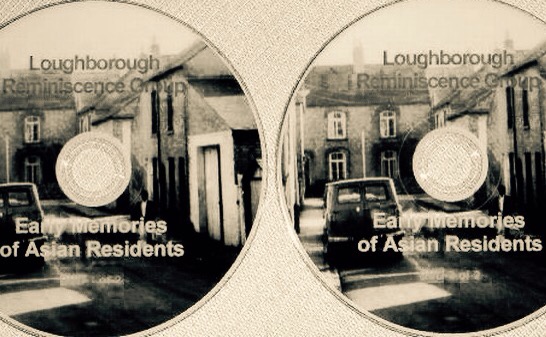
    The Loughborough Reminiscence Group has published a new DVD 'Early Memories of Asian Residents’ as part of its continuing work to capture elements of Loughborough's rich history through people's stories.

    The 2 disc DVD features nine interviews with members of some the Asian communities of Loughborough. All the people interviewed arrived in Loughborough between 1963 and 1975. The contributors are from the Gujarati Hindu, Punjabi Hindu, Punjabi Sikh and Bangladeshi communities.

    The DVD provides fascinating insight on Loughborough's rich multicultural heritage and also features over a 100 photographs of family life and community events that the participants took part in during their time in Loughborough.

    The DVD package contains excellent source material that local schools could incorporate into many areas of their curriculum but that any other person, from Loughborough or not, will find interesting.

    Copies of the DVD cost £10, and are available from Loughborough Reminiscence Group by calling Mike Jones on 01509 843433.

    Paul Conneally
    Cultural Forager
    15 January 2015

    Saturday, May 17, 2014

    A Few Stray Crumbs


    20131219-071214.jpg

    sat at his work desk
    high up on the fifteenth floor
    Geoffrey eats his lunch
    a panini delivered 
    by the Brucciani van

    eighteen eighty two
    Luigi Brucciani
    arrives in England
    footsore after having walked
    all the way from Italy

    he travels on to
    Scotland where he makes ice-cream
    he works up in Ayr
    before moving to Barrow
    to set up his own business 

    this ice-cream parlour
    becomes hugely successful 
    his kids start others
    Morecambe and Preston get
    their own Brucciani

    Leicester has to wait
    'till nineteen thirty seven
    for Brucciani
    to appear in large letters
    on a shop in Horsefair Street

    Leicester folk love this
    'oasis in the city'
    an ice-cream haven
    that Luigi junior
    puts his heart and soul into

    throughout the forties
    fifties, sixties, seventies
    the business expands
    a bakery in Bath Street 
    to prepare cakes and pastries

    cafés open, close
    Horsefair Street closing in
    Nineteen ninety two
    but Brucciani still thrives
    as popular as ever

    two cafés serving
    delicious ice-cream, coffee
    snacks, cakes and pastries
    all made in their bakery
    still located in Bath Street

    none of this knowledge
    disturbs Geoffrey's lunch break  
    a glance at page three
    he just knows a good sandwich 
    from a run of the mill one

    afternoon shadows
    he brushes a few stray crumbs
    from his workstation

    Paul Conneally
    Leicester 2013